BellyFlush Official Website › Testing & Quality
BellyFlush Testing And Quality Seals, Explained
BellyFlush is made in the United States in an FDA-registered facility operating to Good Manufacturing Practice. FDA-registered is a statement about a factory, not an approval of a product, and no dietary supplement is FDA-approved. The label also carries non-GMO, vegetarian, gluten-free, dairy-free, natural-ingredients and doctor-formulated marks. This page explains each one, including what it does not mean.
Eight seals, one of which names no clinician, one of which uses a word with no legal definition, and one image in the vendor art pack that shows a different product altogether.
Every seal on the BellyFlush label
A seal describes. It does not endorse. Here is what each one is actually saying.








What FDA-registered means on a BellyFlush bottle
It means the facility has registered with the FDA, which manufacturers of dietary supplements are required to do. It is a list. Registration is not inspection, it is not endorsement, and it says nothing whatever about the product made there.
The sentence that has to sit beside it: no dietary supplement is FDA-approved. Supplements reach the market without pre-market approval of safety or effectiveness, which is a different regulatory route from medicines. the FDA explains that route in plain language and is worth ten minutes if you buy supplements regularly. the NIH Office of Dietary Supplements covers the same ground from the consumer side.
Good Manufacturing Practice is the more substantive of the two marks. It is a set of requirements about identity, purity, strength and composition, and about keeping records that prove them. It is a genuine standard. It still describes process rather than outcome, and it does not tell you how much senna is in a capsule.
The BellyFlush doctor-formulated seal
A stethoscope, the words doctor formulated, and no clinician named anywhere.
This mark appears in the vendor marketing pack. It is a manufacturer’s statement about its own process, and this desk treats it as exactly that. No name is published, no credential is published, and no description of what was reviewed or when is published.
We are not calling it false. We have no way of knowing either way, and that is the point. An unverifiable authority signal is worth nothing to a careful reader, which is why this website uses a named editorial desk with a method you can check rather than a clinician you cannot.
If the manufacturer names the clinician and the credential, this page will say so and the review date will move forward. Until then it sits here, described accurately, beside the seals that describe something real.

No clinician is named on this seal, on the label, or in this desk’s paperwork.
Two BellyFlush images that need explaining
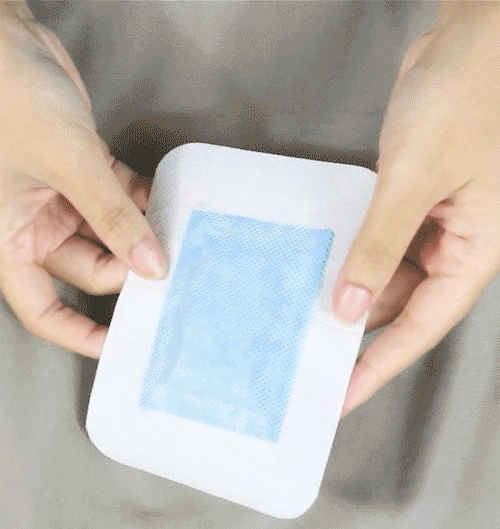
Both arrived in the vendor art pack. One is a brand mark. The other is a different product entirely, and pretending otherwise would be the easy option.

What this BellyFlush page cannot tell you
- ›No published certificate of analysis. This desk holds reference BEL-3584-26-BE. It has not seen a laboratory report and will not publish one it has not seen.
- ›No heavy-metal screen. Not published, and it matters here because bentonite clay is a mineral. Al-Rmalli 2010.
- ›No anthraquinone assay. Not published, which is the figure that would tell you how strongly this acts.
- ›No third-party certification body. No USP, NSF or equivalent mark appears on this label.
- ›No allergen statement. Three free-from marks are printed. A full allergen declaration is not.
That is five blanks on a page about quality, and publishing them is the whole point of the page. A reader who knows exactly which questions are unanswered is in a better position than one who has been reassured by eight roundels.
What Good Manufacturing Practice requires of BellyFlush
Of the eight marks on this label, GMP is the one with the most behind it, so it is worth describing properly rather than nodding at.
For dietary supplements it is a set of requirements covering identity, purity, strength and composition. In practice that means a manufacturer has to verify that an incoming botanical is the plant it claims to be, control contamination between batches, follow a written master manufacturing record, test or examine the finished product against specifications it has set, investigate anything that fails, and keep records that would let somebody reconstruct what happened to a given batch.
Two limits are worth stating alongside that. The specifications are set by the manufacturer rather than by a regulator, so meeting them proves consistency rather than potency. And GMP compliance is a process obligation, verified by inspection when an inspection happens, rather than a certificate issued for each batch.
So the honest reading of this mark: it is a genuine standard, it materially reduces the risk of the wrong plant or a contaminated batch, and it tells you nothing at all about how much senna is in a capsule. the FDA and the NIH Office of Dietary Supplements both cover the regulatory shape in more detail.
Reading the BellyFlush vegetarian, gluten and dairy marks
Three of the eight seals are free-from statements: vegetarian, naturally gluten free and dairy free. They are useful, they are specific, and they are narrower than they look.
Vegetarian matters most for the capsule shell rather than the fill. Most capsule shells are gelatin, which is animal derived. A vegetarian mark implies a plant-based shell, usually a cellulose one, which is the answer to the question people actually have.
Naturally gluten free is a statement that no gluten-containing ingredient is on the panel, which is true by inspection: the eleven names are barks, leaves, seeds, fruits, a root, a clay and an extract. It is not the same as a tested gluten-free certification with a parts per million threshold, and for coeliac disease that distinction can matter.
Dairy free works the same way. No dairy ingredient is listed.
What none of the three tells you is whether the facility handles allergens on shared equipment, because this label carries no full allergen statement. If you react severely to anything, that is a question for the manufacturer through the order desk rather than a question a roundel can answer.
Sources cited on this BellyFlush page
Four sources on how supplements are regulated, what a facility registration means, and why an ingredient source matters.
- U.S. Food and Drug Administration. Questions and Answers on Dietary Supplements. https://www.fda.gov/food/information-consumers-using-dietary-supplements/questions-and-answers-dietary-supplements
- National Institutes of Health, Office of Dietary Supplements. Dietary Supplements: What You Need to Know. https://ods.od.nih.gov/factsheets/WYNTK-Consumer/
- Al-Rmalli SW, Jenkins RO, Watts MJ, Haris PI. Risk of human exposure to arsenic and other toxic elements from geophagy: trace element analysis of baked clay using inductively coupled plasma mass spectrometry. Environ Health. 2010;9:79. https://pubmed.ncbi.nlm.nih.gov/21182763/
- National Center for Complementary and Integrative Health. “Detoxes” and “Cleanses”: What You Need To Know. https://www.nccih.nih.gov/health/detoxes-and-cleanses-what-you-need-to-know
Every page, every journal post, the bottle facts and the ingredients go through review by Alyssa Simpson, RDN before they ship. We write these pages from the BellyFlush label and this desk’s own order paperwork, cite published research for each named botanical, and print “not published” wherever a figure is not disclosed rather than estimating it. The seal beside this note names no clinician, and we treat it as a manufacturing statement rather than a medical endorsement. Corrections are made on the page and the review date moves forward. Write to [email protected]. Last reviewed September 2026 by Alyssa Simpson, RDN.
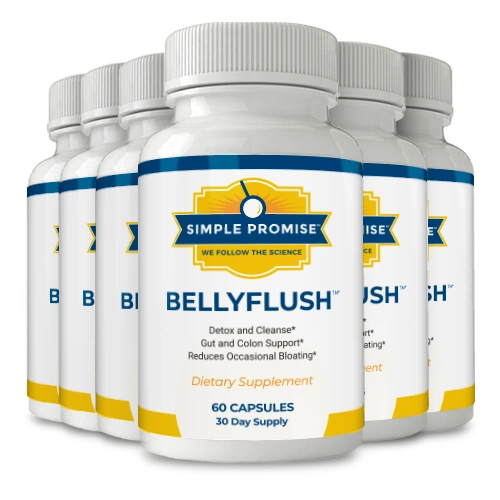
Order BellyFlush from a desk that explains its seals.
Eight marks on the label, each one described accurately, including the two that describe less than they appear to.
$198 for six bottles, $33 each
Order BellyFlush On The Official WebsiteOne-time payment · no subscription · 365-day money-back guarantee · lot BEL-26/BE-3584