BellyFlush Official Website › Blog › The Three Laxatives
Senna, Cascara and Cape Aloe: The Three Laxatives in BellyFlush
Eleven botanicals are named on this label and three of them do the work. All three are anthraquinone stimulant laxatives, they act through the same mechanism, and their evidence and regulatory histories are strikingly different. One has a randomized trial. The other two were removed from over-the-counter laxative drug status in 2002.

- All three are anthraquinones. Same mechanism, activated by colonic bacteria, working in six to twelve hours.
- Senna has the trial. Morishita 2021 is a randomized, placebo-controlled study in chronic constipation.
- Cascara and aloe were named in a 2002 FDA final rule as not generally recognized as safe and effective in over-the-counter laxative drugs.
- That rule governs drugs, not supplements, so this capsule is lawful. Both halves of that belong on the page.
What an anthraquinone actually is
An anthraquinone glycoside is a plant molecule with a sugar attached. The sugar is the important part for a laxative, because it stops the molecule being absorbed in the small intestine. Instead of being taken up in the first few feet of gut, it travels the whole length and arrives in the colon intact.
There, bacteria cleave the sugar off. The freed anthrone irritates the colonic mucosa, provokes stronger contractions, and reduces the water the colon reabsorbs from stool. Faster transit, softer stool, six to twelve hours after swallowing.
Two consequences follow. Your own microbiome is part of the dosing, which is why two people on an identical serving have different mornings. And the delay is designed in, which is why almost every product in this class is taken at night. Demarque 2018 examines the relationship between anthranoid chemistry and the side effects people report, and it is the most useful single paper on the class for a general reader.
Senna, the one with the trial
Senna acts through sennosides, and it is the only one of the three that has been through a properly designed modern trial. Morishita 2021 is a randomized, placebo-controlled study in adults with chronic constipation, comparing senna against magnesium oxide. It is also still a recognised over-the-counter laxative ingredient in the United States, which is a meaningful difference from the other two.
the joint AGA and ACG guideline, the joint guideline from the American Gastroenterological Association and the American College of Gastroenterology, places stimulant laxatives in the treatment ladder for chronic idiopathic constipation. That is a real endorsement of the class, at a stated dose.
The gap that matters here: pharmacy senna prints its sennoside content, because with a laxative the dose is the product. This label prints nothing, so none of the evidence above can be read across to a BellyFlush capsule. Naming an ingredient is not the same as inheriting its trial.
Cascara sagrada and the 2002 ruling
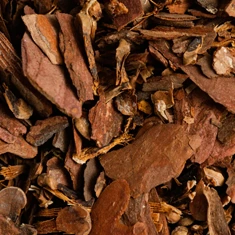
Cascara sagrada is bark from a Pacific Northwest buckthorn and it has been used as a laxative for well over a century. What it does not have is a modern controlled evidence base worth the name.
In 2002 the FDA issued a final rule, the FDA's 2002 final rule, stating that cascara sagrada in over-the-counter laxative drug products, including cascara sagrada bark, is not generally recognized as safe and effective. The reason is worth understanding precisely: manufacturers were asked to submit safety and effectiveness data and did not. It is a finding about missing evidence rather than about demonstrated harm.
It is also a rule about drug products. Dietary supplements reach the market under a different law, so a capsule containing cascara sagrada is entirely lawful. Both halves of that belong in the same paragraph, and a page that prints only one of them is misrepresenting it in one direction or the other.
Cape aloe: latex, not the gel
This is the distinction most people get wrong, and the marketing does nothing to help.
Two completely different preparations
The clear inner gel of an aloe leaf is the soothing preparation sold for skin and for drinking. The latex is the bitter yellow sap just under the leaf skin, and it is a powerful anthraquinone purgative driven by aloin. A colon formula uses the latex. They share a plant and almost nothing else.
What the evidence looks like
Aloe is the second ingredient named in the same 2002 rule, carrying the same not-generally-recognized finding for the same reason. the NCCIH aloe vera page sets out what is and is not known about the plant and notes the safety concerns with oral latex preparations. The one controlled constipation trial we can point at, Odes 1991, tested a combination that also contained celandine and psyllium, so it cannot tell you what the aloe contributed on its own.
The three compared
| Senna | Cascara sagrada | Cape aloe | |
|---|---|---|---|
| Active class | Sennosides | Cascarosides | Aloin |
| Randomized trial | Yes | No modern one | One, inside a combination |
| US OTC drug status | Recognised | Not generally recognized, 2002 | Not generally recognized, 2002 |
| Printed dose here | Not published | Not published | Not published |
| Typical onset | 6 to 12 hours | 6 to 12 hours | 6 to 12 hours |
Reading across that table is the fastest way to understand this formula. It is built on one well-evidenced botanical and two that carry a regulatory footnote, and none of the three has a number attached.

The panel, with nothing left out.
BellyFlush names eleven botanicals and publishes no amounts. This desk prints that on every page, including the one with the order button on it.
$198 for six bottles, $33 each
Order BellyFlush On The Official WebsiteOne payment · no subscription · 365-day money-back guarantee
What long use does
Two things, and the internet consistently overstates one and understates the other.
- Melanosis coli. Prolonged anthraquinone use pigments the colonic lining. It is striking at colonoscopy, harmless in itself, and it reverses within months of stopping. a 2020 review of melanosis coli is a comprehensive review.
- The cancer question. Nascimbeni 2002 examined whether the pigmentation marks a risk, using aberrant crypt foci as the endpoint. The picture there is more reassuring than the folklore suggests.
- The understated part. A routine built around a nightly stimulant is a routine that has stopped addressing whatever caused the problem. That is undramatic and it is the genuinely important point.
Practical position, from a desk that sells the product: use it as a course with an end date rather than as a nightly habit. If the end date keeps moving, that is a conversation with a pharmacist rather than a reorder.
A blend or a single herb?
Worth asking honestly, because the answer is not automatically the blend.
A single-ingredient senna product prints its sennoside content, has the strongest evidence of the three, costs a few dollars, and lets you titrate from one tablet. If your priority is knowing exactly what you are taking, that is the better buy and this desk will say so.
A blend like this one surrounds the laxatives with demulcents and carminatives, which is a real difference in experience rather than in outcome. Marshmallow root and slippery elm form a mucilage, fennel is a traditional carminative, and the combination is generally gentler to take than a single stimulant at the same strength. What you give up is the number.
That trade is the whole decision, and it is easier to make once it is stated plainly. The checklist guide works through the other seven questions worth asking before either choice.
What to take from all of this
Four things, in the order they matter to somebody standing in front of a shelf or a checkout.
- Anthraquinone products work, and they work overnight. That is not in dispute and it is not a marketing claim. It is a documented mechanism with a randomized trial behind the best-studied member of the group.
- The 2002 ruling is real, and it is narrower than it sounds. It concerns over-the-counter laxative drug products and it turns on data that were never submitted. A supplement containing cascara or aloe is lawful. Somebody who did not know the history is still entitled to it before they pay.
- Dose is the whole story and this label does not tell it. Every trial cited in this article used a stated quantity. None of them can be read across to a capsule that publishes no number.
- Duration is the safety variable. Not the ingredient, not the brand, not the capsule shell. How many consecutive nights, and whether there is a plan to stop.
| What a specified laxative label prints | Pharmacy senna | This panel |
|---|---|---|
| Milligrams of the botanical | Yes | Not published |
| Sennoside content per serving | Yes | Not published |
| Extraction ratio | Not applicable | Not published |
| Maximum duration without advice | Usually stated | Absent |
| Named interactions on the pack | Usually stated | Absent |
| Soothing botanicals alongside | None | Four |
Read down the last column and the trade becomes concrete. What this blend adds is the right-hand row. What it gives up is every row above it.
If a single sentence has to survive this article, it is that a stimulant laxative is a tool with a job and an end date. Used that way it is unremarkable and occasionally very useful. Used as a nightly habit for a year it becomes the thing that stopped you addressing whatever caused the problem, which is the argument the joint AGA and ACG guideline makes with considerably more authority than a retail desk can.
General information, not medical advice. BellyFlush is a dietary supplement for healthy adults aged 18 and over. It is not a drug, it is not FDA-approved, and it is not intended to diagnose, treat, cure or prevent any disease. Constipation that is new, persistent or accompanied by pain, bleeding or weight change is a medical matter. Speak to a clinician before using any stimulant laxative product if you take prescription medication, are pregnant or nursing, or have a diagnosed bowel condition.
Sources
- Morishita D, Tomita T, Mori S, et al. Senna Versus Magnesium Oxide for the Treatment of Chronic Constipation: A Randomized, Placebo-Controlled Trial. Am J Gastroenterol. 2021;116(1):152-161. https://pubmed.ncbi.nlm.nih.gov/32969946/
- U.S. Food and Drug Administration. Status of Certain Additional Over-the-Counter Drug Category II and III Active Ingredients. Final rule, 67 FR 31125, 9 May 2002. Aloe and cascara sagrada in OTC laxative drug products are not generally recognized as safe and effective. https://www.federalregister.gov/documents/2002/05/09/02-11510/status-of-certain-additional-over-the-counter-drug-category-ii-and-iii-active-ingredients
- Demarque DP, Pinho DR, Dusi RG, et al. Cytotoxicity of Structurally Diverse Anthranoids and Correlation with Mechanism of Action and Side Effects. J Pharm Pharm Sci. 2018;21(1):347-353. https://pubmed.ncbi.nlm.nih.gov/30321134/
- Yang N, Ruan M, Jin S. Melanosis coli: A comprehensive review. Gastroenterol Hepatol. 2020;43(5):266-272. https://pubmed.ncbi.nlm.nih.gov/32094046/
- Nascimbeni R, Donato F, Ghirardi M, et al. Constipation, anthranoid laxatives, melanosis coli, and colon cancer: a risk assessment using aberrant crypt foci. Cancer Epidemiol Biomarkers Prev. 2002;11(8):753-757. https://pubmed.ncbi.nlm.nih.gov/12163329/
- Odes HS, Madar Z. A double-blind trial of a celandin, aloevera and psyllium laxative preparation in adult patients with constipation. Digestion. 1991;49(2):65-71. https://pubmed.ncbi.nlm.nih.gov/1800188/
- Chang L, Chey WD, Imdad A, et al. American Gastroenterological Association-American College of Gastroenterology Clinical Practice Guideline: Pharmacological Management of Chronic Idiopathic Constipation. Gastroenterology. 2023;164(7):1086-1106. https://pubmed.ncbi.nlm.nih.gov/37211380/
- National Center for Complementary and Integrative Health. Aloe Vera: Usefulness and Safety. https://www.nccih.nih.gov/health/aloe-vera

Every page, every journal post, the bottle facts and the ingredients go through review by Alyssa Simpson, RDN before they ship. We write these pages from the BellyFlush label and this desk’s own order paperwork, cite published research for each named botanical, and print “not published” wherever a figure is not disclosed rather than estimating it. The seal beside this note names no clinician, and we treat it as a manufacturing statement rather than a medical endorsement. Corrections are made on the page and the review date moves forward. Write to [email protected]. Last reviewed September 2026 by Alyssa Simpson, RDN.