BellyFlush Official Website › Blog › Licorice And Blood Pressure
Licorice Root and Blood Pressure: The Interaction on This Label
Licorice root is the ingredient on this panel most likely to matter to somebody taking medication, and the one most likely to be underestimated because it is also a sweet. Glycyrrhizin, its active compound, can raise blood pressure and lower potassium with consistent use. On a panel that also contains three laxatives, that is worth a paragraph rather than a footnote.
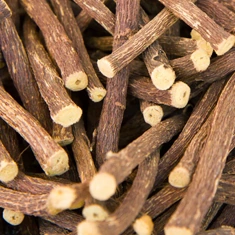
- Glycyrrhizin imitates excess aldosterone, which raises blood pressure and lowers potassium.
- Penninkilampi 2017 pooled the studies and found that association across consistent intake.
- The laxatives push potassium the same way, so two ingredients on one panel compound each other.
- This label does not say whether the extract is deglycyrrhizinated, and that is the missing word that would resolve it.
What glycyrrhizin does in the body
The kidney has a receptor that responds to aldosterone, the hormone that tells it to hold on to sodium and let go of potassium. Cortisol can activate that same receptor, so the body keeps an enzyme nearby whose whole job is to convert cortisol into an inactive form before it reaches it.
Glycyrrhizin inhibits that enzyme. Cortisol then reaches the receptor and activates it, and the result imitates having too much aldosterone: sodium retained, potassium lost, blood pressure up. It is an elegant mechanism and it is entirely predictable once you know it.
The effect depends on how much and for how long. Occasional licorice is not a health problem. Consistent daily intake is where the literature starts to find something, and a capsule taken every night is by definition consistent daily intake.
What the evidence actually found
Penninkilampi 2017 is a systematic review and meta-analysis of consistent licorice ingestion, hypertension and hypokalaemia. Pooling the available studies, it found the association the mechanism predicts. That is the paper to read if you want the numbers rather than a summary.
the NCCIH licorice root page states the caution in plainer language and is the better starting point for most people. It is a government page, it sells nothing, and it takes five minutes to read.
Two honest qualifications. Most of that literature concerns licorice confectionery and licorice tea consumed in quantity, not a fraction of a capsule. And because this label publishes no amount, nobody can say where a BellyFlush serving sits on that scale. The correct position is caution rather than alarm, and caution is easy: ask a pharmacist.
Why it matters more in a laxative blend
Because potassium is being pushed the same direction from two sources at once, and that is unusual enough to deserve its own section.
The bowel route
Stimulant laxatives cause potassium loss through the stool. That is a known effect of the class, it is why potassium is mentioned in laxative safety information generally, and it applies to all three of the anthraquinones on this panel.
The kidney route
Glycyrrhizin causes potassium loss through the kidney, by the mechanism described above. Different organ, same direction.
The third route, for some people
A diuretic or a corticosteroid adds a third. Somebody on a thiazide diuretic who starts a nightly capsule containing both laxatives and licorice is stacking three separate potassium losses, and low potassium is the reason dizziness, muscle weakness and irregular heartbeat appear in the stop list on the side effects page.
Deglycyrrhizinated, and the word this label omits
There is a form of licorice extract with the glycyrrhizin removed, usually abbreviated DGL. It largely sidesteps the blood pressure and potassium problem while keeping the soothing properties the herb is traditionally used for.
| Standard licorice extract | Deglycyrrhizinated (DGL) | |
|---|---|---|
| Contains glycyrrhizin | Yes | Largely removed |
| Blood pressure concern | Yes, with consistent use | Substantially reduced |
| Potassium concern | Yes | Substantially reduced |
| Soothing properties | Retained | Retained |
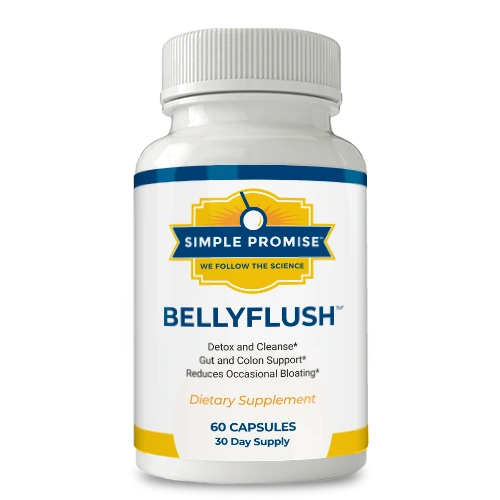
| Which one is in BellyFlush | Not published. The label says licorice root extract and stops there | |
One word on a label would answer this completely. Its absence is the second-clearest example on this product of what an unspecified panel costs a buyer, after the missing milligrams themselves. The ingredients page covers both.

Read the panel before you order.
Eleven named botanicals, no published amounts, and a website that puts the interactions on the page rather than in the small print.
$198 for six bottles, $33 each
Order BellyFlush On The Official WebsiteOne payment · no subscription · 365-day money-back guarantee
Who should be careful
| If this is you | Why |
|---|---|
| High blood pressure, treated or not | Glycyrrhizin works against control and can raise it further |
| On a diuretic | A third route of potassium loss on top of two |
| On a corticosteroid | Also lowers potassium independently |
| On digoxin | Low potassium increases digoxin toxicity. The most serious interaction on this list |
| Kidney or liver disease | Handling of both electrolytes and botanicals is altered |
| Pregnant or nursing | The label excludes this group regardless |
None of that means a person in one of those rows cannot use a product like this. It means the decision belongs to somebody who knows their medication list, and that a two-minute conversation resolves it either way.
What to ask a pharmacist
- Lead with the class. “A herbal stimulant laxative containing senna, cascara sagrada and cape aloe, plus licorice root.” A brand name means nothing to them.
- Name licorice separately. It is the one they are least likely to assume and the one most likely to matter.
- Ask about potassium. Whether anything you already take lowers it.
- Ask about spacing. Bentonite clay is also on this panel and binds medication, so which of your tablets need a two-hour gap.
- Write the answers down before you leave the counter.
Print or screenshot the ingredients page and hand it over. A list of eleven named botanicals is far more useful than a description of a bottle, which is part of why this website publishes the panel as a table.
What licorice is genuinely good for
It would be unbalanced to spend an article on the risk and not the reason it is on the panel at all. Raveendra 2012 is a randomized, double-blind, placebo-controlled trial of a standardised licorice extract in functional dyspepsia, and it reported symptom relief. That is a real trial with a real result.
Traditionally it is a demulcent and a soother, which is exactly what a formula built around three purgatives needs. In that role it is a sensible inclusion, and the criticism in this article is not that licorice is present but that the label will not say which form or how much.
The same pattern runs through the whole panel. Morishita 2021 and the joint AGA and ACG guideline support the ingredient class, and neither can be read across to a capsule that publishes no numbers. Good ingredients, unspecified product.
Signs worth noticing while taking it
Low potassium is the thing this whole article circles, and it is worth knowing what it actually feels like rather than only what it is called.
- Muscle weakness or cramp, particularly in the legs, and particularly if it is new and has no obvious cause.
- Unusual tiredness that does not track with sleep.
- Palpitations or a heartbeat that feels irregular. This is the one to act on the same day rather than to monitor.
- Dizziness on standing, especially alongside any of the above.
- Increased thirst or passing more urine, which can accompany an electrolyte shift.
None of those is common at ordinary supplement intakes and none of them should cause alarm in isolation. Two or three together, in somebody taking a nightly laxative blend containing licorice, is a reason to stop and speak to a clinician rather than to push on. Blood pressure is easy to check at a pharmacy and potassium is a routine blood test, so the question is answerable rather than theoretical.
The practical rule this desk suggests: if you take anything for blood pressure, check it a couple of times during the first month rather than relying on how you feel. It costs nothing and it turns an unknown into a number.
The same advice applies in reverse to anybody who has never had their blood pressure checked. A first reading taken before starting anything is a baseline, and a baseline is what makes a second reading meaningful. Pharmacies in most places will take one without an appointment and usually without a charge, which makes this the least burdensome piece of advice on the whole website.
None of this is a reason to avoid the product. It is a reason to spend two minutes at a counter before the first capsule rather than wondering afterwards. The whole point of publishing an interaction in this much detail is that an informed buyer can handle it, and an uninformed one cannot even see it. Everything on this page is on the side effects page as well, in shorter form, alongside the other interactions that matter on this panel.
General information, not medical advice. BellyFlush is a dietary supplement for healthy adults aged 18 and over. It is not a drug, it is not FDA-approved, and it is not intended to diagnose, treat, cure or prevent any disease. Constipation that is new, persistent or accompanied by pain, bleeding or weight change is a medical matter. Speak to a clinician before using any stimulant laxative product if you take prescription medication, are pregnant or nursing, or have a diagnosed bowel condition.
Sources
- Morishita D, Tomita T, Mori S, et al. Senna Versus Magnesium Oxide for the Treatment of Chronic Constipation: A Randomized, Placebo-Controlled Trial. Am J Gastroenterol. 2021;116(1):152-161. https://pubmed.ncbi.nlm.nih.gov/32969946/
- Penninkilampi R, Eslick EM, Eslick GD. The association between consistent licorice ingestion, hypertension and hypokalaemia: a systematic review and meta-analysis. J Hum Hypertens. 2017;31(11):699-707. https://pubmed.ncbi.nlm.nih.gov/28660884/
- Raveendra KR, Jayachandra, Srinivasa V, et al. An Extract of Glycyrrhiza glabra (GutGard) Alleviates Symptoms of Functional Dyspepsia: A Randomized, Double-Blind, Placebo-Controlled Study. Evid Based Complement Alternat Med. 2012;2012:216970. https://pubmed.ncbi.nlm.nih.gov/21747893/
- Chang L, Chey WD, Imdad A, et al. American Gastroenterological Association-American College of Gastroenterology Clinical Practice Guideline: Pharmacological Management of Chronic Idiopathic Constipation. Gastroenterology. 2023;164(7):1086-1106. https://pubmed.ncbi.nlm.nih.gov/37211380/
- National Center for Complementary and Integrative Health. Licorice Root: Usefulness and Safety. https://www.nccih.nih.gov/health/licorice-root

Every page, every journal post, the bottle facts and the ingredients go through review by Alyssa Simpson, RDN before they ship. We write these pages from the BellyFlush label and this desk’s own order paperwork, cite published research for each named botanical, and print “not published” wherever a figure is not disclosed rather than estimating it. The seal beside this note names no clinician, and we treat it as a manufacturing statement rather than a medical endorsement. Corrections are made on the page and the review date moves forward. Write to [email protected]. Last reviewed September 2026 by Alyssa Simpson, RDN.