BellyFlush Official Website › Blog › Is A Colon Cleanse Necessary?
Is a Colon Cleanse Necessary? What the Evidence Says
No. A healthy colon empties itself, it does not store a lining of accumulated waste, and nothing needs to be flushed out of it. This desk sells a colon formula and that is still the correct answer. What these products actually do is change transit and comfort, which is a narrower and more defensible claim.
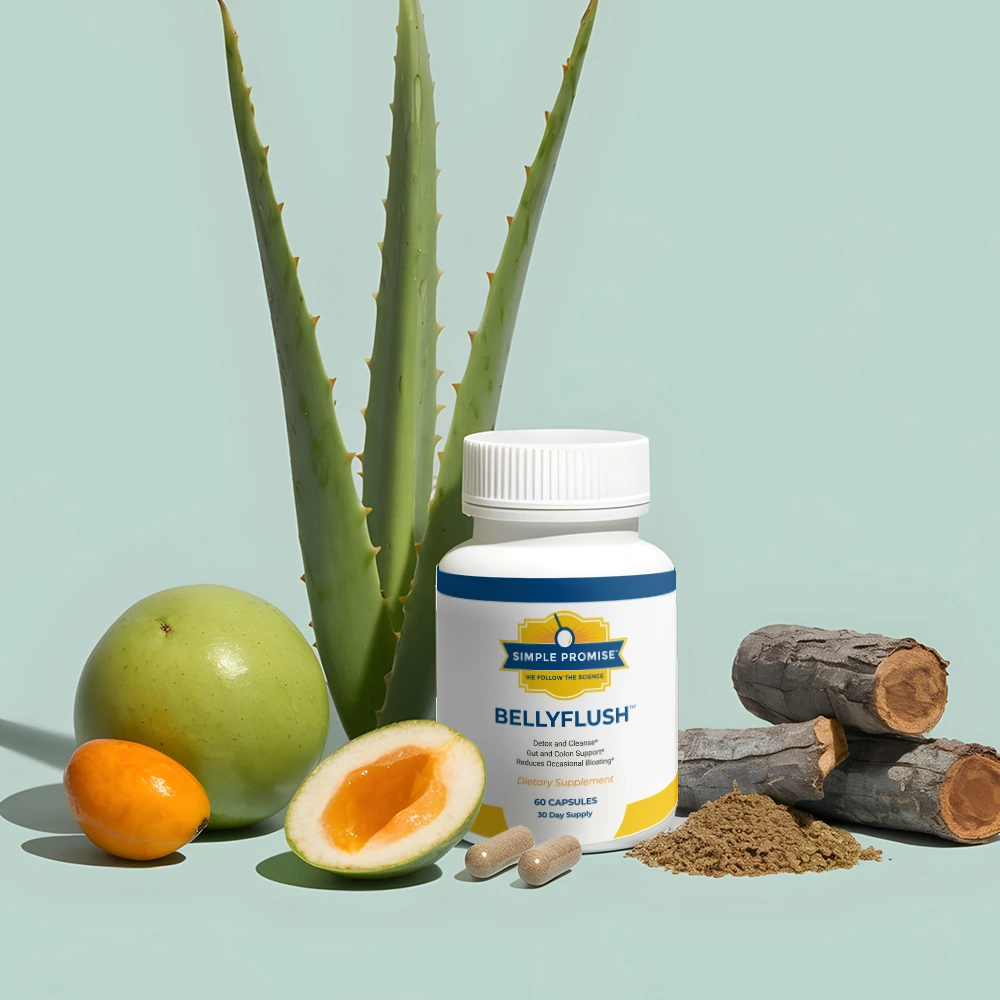
- Autointoxication is a discarded idea. A healthy colon does not accumulate putrefied residue.
- Detox has no endpoint you can measure. Klein 2015 looked at the literature and found the human evidence weak.
- Transit and comfort are real. Judge these products on those instead.
- Necessary is the wrong word entirely. Optional, occasionally useful, and not a requirement for health.
Where the idea came from
The belief that a healthy colon accumulates a lining of putrefied waste is about a century old. It was called autointoxication, it was taken seriously by parts of medicine for a while, and it was abandoned as the physiology became better understood. It survives almost entirely in advertising.
The modern version is softer and harder to argue with, because it is vaguer: that modern food, stress and processed ingredients leave something behind that a supplement can clear. NCCIH addresses the claim directly and in plain language, which is why it is the first link in this article rather than the last.
None of that means the products do nothing. It means the thing they do has a different name from the one on the front of the bottle, and using the accurate name makes the decision easier.
What a colon actually does
It reabsorbs water and electrolytes from what the small intestine has finished with, houses an enormous bacterial population that ferments what you could not digest, and moves the remainder along by muscular contraction. The lining renews itself constantly, on a timescale of days rather than years.
That renewal is the reason there is nothing to scrape off. A surface that replaces itself every few days cannot accumulate a decade of residue, and nobody has ever produced one from a living person despite the photographs that circulate online.
Detoxification, in the sense the word actually has in medicine, is continuous work done by the liver and the kidneys. It does not pause and wait for a supplement. Milk thistle, which is on this label, has a genuine evidence base in diagnosed liver disease, summarised in Li 2024, and that is a considerably narrower statement than clearing toxins out of a healthy person.
What the evidence shows
Klein 2015 is the most useful single paper for a general reader. It reviewed the detox literature and found the human evidence thin, poorly controlled and largely reliant on small studies with soft endpoints.
That is not a claim that nothing happens when somebody takes a cleanse product. Stimulant laxatives plainly do something and it is measurable: a Cochrane review reviews the class, and the joint AGA and ACG guideline places it in the treatment ladder for chronic constipation. The evidence gap is specifically about cleansing and detoxification as concepts, not about bowel motility as a mechanism.
So the accurate summary is unglamorous. There is decent evidence that these ingredients move the bowel. There is no good evidence that a healthy person needs them to, and there is no measurement that would tell you whether a cleanse has succeeded.
What these products do do
Three things, all narrower than the marketing and all more useful to know.
- They speed transit. Stool spends less time in the colon, so less water is reabsorbed and it stays softer.
- They reduce what is sitting there. Less volume in the colon is the most mechanical route to feeling less distended, and it is probably most of what people describe.
- They make a routine predictable for a while. For somebody whose routine has drifted, that is worth something on its own.
What they do not do is remove a deposit, reset anything, or alter the work the liver and kidneys are already doing. If the reason you are considering one is the first of those, the honest advice is to stop considering it.
Claims against measurable endpoints
| Claim | What would have to be measured | Does it exist? |
|---|---|---|
| Removes impacted waste | Imaging a deposit, then imaging its absence | No. The deposit does not exist |
| Flushes toxins | A named toxin and a measured clearance rate | No named toxin is specified anywhere |
| Resets the gut | A microbiome measure before and after | Not for these products |
| Reduces occasional bloating | A self-reported distension score | Yes, and you can run it at home |
| Improves transit | Stool frequency and consistency | Yes, and it is what Morishita 2021 measured |
The bottom two rows are the ones a buyer can actually use. They are also the two that match what the BellyFlush label prints, which is why the benefits page treats gut and colon support as the strongest of its three claims and detox as the weakest.
If you want the narrow version, this is it.
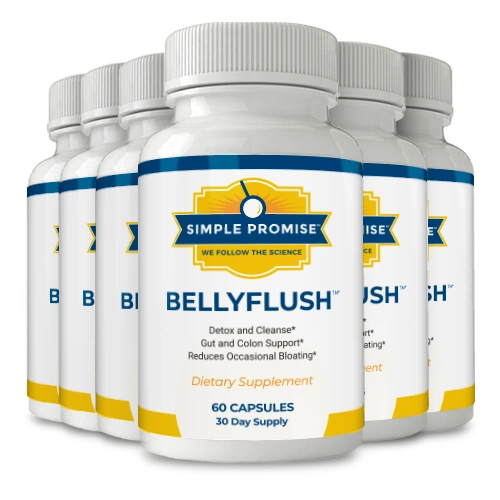
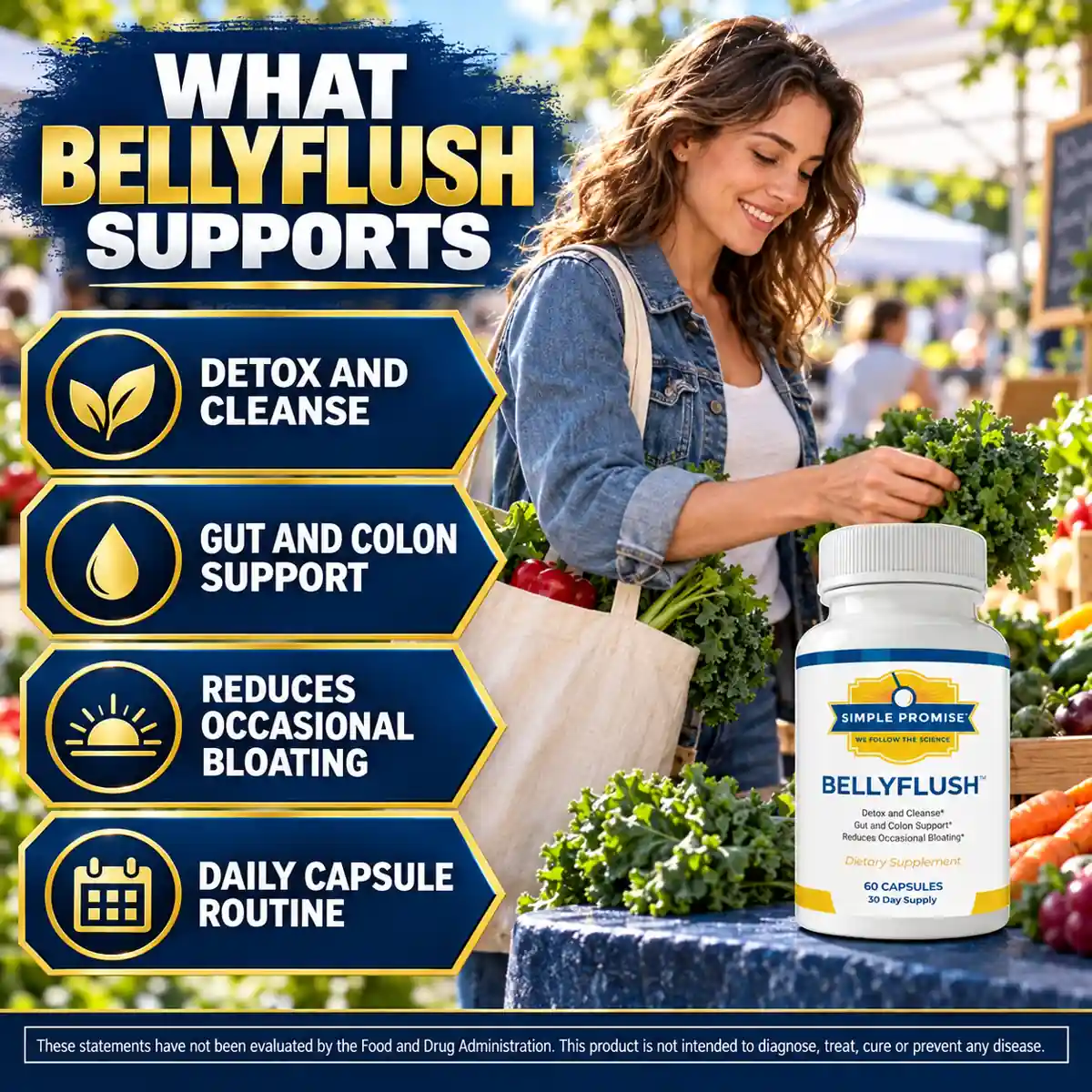
BellyFlush claims detox and cleanse, gut and colon support, and reduced occasional bloating. This website argues with the first one on its own product page.
$198 for six bottles, $33 each
Order BellyFlush On The Official WebsiteOne payment · no subscription · 365-day money-back guarantee
Four things that work better and cost nothing
- Fibre, raised gradually. Sudden increases produce wind and bloating, which is how most people conclude fibre does not suit them.
- Fluid across the day. Not a litre at bedtime. Fibre without fluid makes the problem worse rather than better.
- Movement after the largest meal. Twenty minutes of walking does more for transit than most of what is sold for it.
- An unhurried morning window. The single most underrated intervention. A routine needs a time and a place, and most people have neither.
| Measure | Cost | How fast | Addresses the cause? |
|---|---|---|---|
| Fibre, raised gradually | Nothing | Days to weeks | Yes |
| Fluid across the day | Nothing | Days | Yes |
| Movement after the largest meal | Nothing | Days | Yes |
| An unhurried morning window | Twenty minutes | Days to weeks | Yes |
| A stimulant laxative blend | $59 a month | Overnight | No. It works downstream of the cause |
the NIDDK sets all of this out properly and sells nothing. If those four have not been tried, buying any supplement in this category is paying to skip the step that would probably have worked.
When wanting a cleanse is a symptom
Sometimes the urge to cleanse is a reasonable response to feeling sluggish, and sometimes it is the wrapping around something that needs looking at.
See a clinician rather than buying anything for constipation that is new and persistent, particularly over about the age of fifty. Any rectal bleeding. Abdominal pain that is sharp, localised or waking you. Unintended weight change. Vomiting. A change in the calibre of stool that has not reverted. New alternating constipation and diarrhoea. A family history of bowel cancer.
A laxative can mask several of those, and in a suspected obstruction it is actively dangerous. That is the one situation where the category does real harm, and it is worth repeating on a page that otherwise treats these products as fairly ordinary.
For everybody else, the answer to the title question stands. Not necessary. Occasionally useful. Judge it on transit and comfort, measure it with a number, and stop when the course ends.
Why a desk that says this sells one anyway
It is a fair question to ask of an article like this, and answering it is more useful than pretending the question does not arise.
The honest position is that the product does something real and the marketing around the category describes something that is not real. Those can both be true. A capsule containing senna, cascara sagrada and cape aloe will move the bowel overnight. Surrounding it with demulcents and carminatives makes that a more tolerable experience than a single stimulant at the same strength. For somebody whose routine has drifted and who has already tried the dull measures, that is worth buying.
What this desk will not do is attach the wider claim to it. There is no deposit being removed, no reset taking place and no toxin being cleared, and every page here that touches the word detox says so, including the benefits page, which calls it the weakest of the three printed claims.
It costs something to write that. It is also the only version of this website that survives a sceptical reader, and a sceptical reader is the one most likely to be reading an article titled with a question. If that reader decides more fibre and a twenty-minute walk is the better answer, they have taken the advice the NIDDK would have given them, and this page has done its job whether or not anything is ordered.
One last framing, because the title question deserves a clean ending. Necessary is a word that belongs to things like fluid, fibre and sleep. A colon formula is not in that category and never will be. It belongs with the smaller, more ordinary class of things people buy because a specific situation has become uncomfortable and they would like it to stop being uncomfortable for a few weeks. Judged as that, it is a reasonable purchase. Judged as a requirement for health, it is a claim nobody has supported and this desk is not going to start.
General information, not medical advice. BellyFlush is a dietary supplement for healthy adults aged 18 and over. It is not a drug, it is not FDA-approved, and it is not intended to diagnose, treat, cure or prevent any disease. Constipation that is new, persistent or accompanied by pain, bleeding or weight change is a medical matter. Speak to a clinician before using any stimulant laxative product if you take prescription medication, are pregnant or nursing, or have a diagnosed bowel condition.
Sources
- Gordon M, Naidoo K, Akobeng AK, Thomas AG. Cochrane Review: Osmotic and stimulant laxatives for the management of childhood constipation. Evid Based Child Health. 2013;8(1):57-109. https://pubmed.ncbi.nlm.nih.gov/23878124/
- Li S, Duan F, Li S, Lu B. Administration of silymarin in NAFLD/NASH: A systematic review and meta-analysis. Ann Hepatol. 2024;29(2):101174. https://pubmed.ncbi.nlm.nih.gov/38579127/
- Klein AV, Kiat H. Detox diets for toxin elimination and weight management: a critical review of the evidence. J Hum Nutr Diet. 2015;28(6):675-686. https://pubmed.ncbi.nlm.nih.gov/25522674/
- Chang L, Chey WD, Imdad A, et al. American Gastroenterological Association-American College of Gastroenterology Clinical Practice Guideline: Pharmacological Management of Chronic Idiopathic Constipation. Gastroenterology. 2023;164(7):1086-1106. https://pubmed.ncbi.nlm.nih.gov/37211380/
- National Institute of Diabetes and Digestive and Kidney Diseases. Treatment for Constipation. https://www.niddk.nih.gov/health-information/digestive-diseases/constipation/treatment
- National Center for Complementary and Integrative Health. “Detoxes” and “Cleanses”: What You Need To Know. https://www.nccih.nih.gov/health/detoxes-and-cleanses-what-you-need-to-know

Every page, every journal post, the bottle facts and the ingredients go through review by Alyssa Simpson, RDN before they ship. We write these pages from the BellyFlush label and this desk’s own order paperwork, cite published research for each named botanical, and print “not published” wherever a figure is not disclosed rather than estimating it. The seal beside this note names no clinician, and we treat it as a manufacturing statement rather than a medical endorsement. Corrections are made on the page and the review date moves forward. Write to [email protected]. Last reviewed September 2026 by Alyssa Simpson, RDN.