BellyFlush Official Website › Blog › Has BellyFlush Been Studied?
Has BellyFlush Been Studied? A Plain Look at the Research Scorecard
No study of BellyFlush as a finished product has been published. The research cited here covers single plants, usually at stated doses this label does not print. Senna has the strongest trial record. So the honest answer to whether it works is: plausible in part, unproven as a whole.
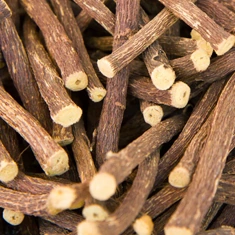
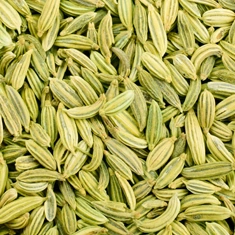

- BellyFlush as sold has never been tested as a finished product.
- Senna has a randomized, placebo-controlled trial in adults with chronic constipation, at a stated dose.
- Licorice, triphala, fennel, slippery elm, cayenne and milk thistle each have papers, but in different preparations, doses or conditions.
- No amount is published for any botanical, so no paper can be laid over this label.
- The strongest honest claim is about the mechanism, not about the capsule.
- A written four-week test of your own is a better test than a review score.
Is there a clinical trial of BellyFlush itself?
No. Nobody has published a trial of this capsule as a finished product, and this site would say so loudly if one existed. What exists is a spread of papers on the single plants named on the label.
That sounds like a small gap. It is the biggest one on the page. A plant in a capsule is not the same as a plant in a trial, because the trial fixed the amount and the preparation, and this label fixes neither in public.
What does the scorecard look like?
Here is the whole stack in one table, with the one question that matters in the last column: does it apply to this capsule?
| Source | What it studied | Dose | Applies to this capsule? |
|---|---|---|---|
| Morishita 2021 | Senna against magnesium oxide, a randomized trial | Stated | No. The dose is not published here |
| The 2002 FDA final rule | Aloe and cascara in over-the-counter laxative drugs | None | Context, not a supplement ban |
| Penninkilampi 2017 | Licorice, blood pressure and potassium | Measurable | No. The dose is not published here |
| Tarasiuk 2018 | Triphala in functional gut disorders | Review | No |
| Portincasa 2016 | Fennel oil with curcumin in IBS | Stated | No. A different preparation |
| Hawrelak 2010 | Slippery elm inside a combination | Pilot | No |
| Fuhrer 2011 | An oral capsaicin load in dyspepsia | Stated | No |
| Li 2024 | Silymarin in fatty liver disease | Standardised | No |
| BellyFlush as sold | Never tested as a finished product | Unknown | Not applicable |
Which ingredient has the strongest evidence?
Senna, by a distance. Morishita 2021 is a randomized, placebo-controlled trial in adults with chronic constipation, comparing senna with magnesium oxide. Gordon 2013 is a Cochrane review of osmotic and stimulant laxatives for childhood constipation, which reviews the class more broadly. And Chang 2023, the joint AGA and ACG guideline, places stimulant laxatives in the recognised treatment ladder.
Read those carefully and the limit is clear. Each describes a stated dose of sennosides. This label publishes none, and no sennoside content, so a reader cannot line this capsule up with any of them.
Cascara sagrada and cape aloe have far less. Cascara has a century of use and very little modern controlled testing. Aloe has one old trial, Odes 1991, of a combination that also held celandine and psyllium, so it cannot say what the aloe added by itself.
What does a trial need to match before it applies?
A fair way to test any paper is to ask five questions of it. A result carries over to a product only when the answers line up.
- Same ingredient. The plant in the paper is the plant on the label.
- Same preparation. An essential oil, a standardised extract and a ground bark are three different things.
- Same dose. The amount in the trial is close to the amount in the capsule.
- Same people. Adults with a diagnosed condition may react differently from healthy adults.
- Same question. A trial of dyspepsia says little about bloating or bowel timing.
For BellyFlush the dose answer is always unknown, and for several botanicals the preparation and the condition are different too.
What do the weaker links look like?
- Open-label. Munshi 2011 tested a triphala-based formula in functional constipation, with everyone knowing what they took. In a condition judged by how you feel, that is a real limit.
- Pilot inside a combination. Hawrelak 2010 included slippery elm in a small pilot, and Hawrelak 2020 puts the family of western herbs for irritable bowel in context.
- Different condition. Raveendra 2012 gave a standardised licorice extract to people with functional dyspepsia and reported symptom relief. That is not a study of blood pressure, bloating or timing.
- Diagnosed disease. Li 2024 reviewed silymarin in fatty liver disease. The NCCIH page on milk thistle gives the balanced read.
- Lab work. Rownaghi 2024 measured the polysaccharide in marshmallow root. It is a laboratory result, not a clinical one.
So does BellyFlush work?
There are two questions inside that one, and they run on different clocks.
The overnight effect
About 6 to 12 hours. The mechanism is well understood for senna, and the other two laxatives act the same way. If the capsule is in your system, you will know.
Everything else
A lighter evening or a feeling of detox. The most common wait is 3 to 6 weeks, and it is self-reported, so it is the part most open to expectation.
On detox, NCCIH sets out what is known about cleanses, and Klein 2015 reviewed the literature and found the human evidence weak. A healthy colon empties itself.
So the overnight effect is plausible and expected. The detox claim has no measurable endpoint. The bloating claim is plausible and unproven.
What would settle the question?
- A printed amount for each of the eleven botanicals.
- The extraction ratio for the two ingredients labelled as extracts.
- The sennoside content of the senna.
- A trial of the finished capsule.
- A laboratory report this desk can see, including a heavy-metal screen.
Until then, any claim about the strength of this product, on any website, including this one, is an assumption.
How can you run your own small test?
A written test is the next best thing. For seven days before you start, note each evening how swollen you felt from one to five and whether the day had a bowel movement. Then take the capsules for four weeks, change nothing else, and compare the averages.
One bottle is 30 nights. It covers the baseline, the settling period and the four-week check, and you are still inside the guarantee window if it does nothing for you.
What are the price and guarantee facts?
| Pack | Total | Per bottle | Supply | Cost a day |
|---|---|---|---|---|
| 1 bottle | $59 | $59 | 30 days | $1.97 |
| 3 bottles | $147 | $49 | 90 days | $1.63 |
| 6 bottles | $198 | $33 | 180 days | $1.10 |
The guarantee is 365 days from purchase, covers opened bottles and needs the empty bottles back at your postage cost. The refund is a purchase term, not a health promise.
General information, not medical advice. BellyFlush is a dietary supplement for healthy adults aged 18 and over. It is not a drug, it is not FDA-approved (no dietary supplement is), and it is not intended to diagnose, treat, cure or prevent any disease. It is not for anyone under 18, or anyone pregnant or nursing. It contains three stimulant laxatives, so ask a doctor or pharmacist first if you take a diuretic, a corticosteroid, digoxin, a blood thinner or a blood pressure medicine, or if you have a bowel condition. Pain, bleeding, vomiting, dizziness or an irregular heartbeat means stop and get advice.
Sources used
- Morishita 2021, Am J Gastroenterol. https://pubmed.ncbi.nlm.nih.gov/32969946/
- FDA final rule 67 FR 31125 (2002). https://www.federalregister.gov/documents/2002/05/09/02-11510/status-of-certain-additional-over-the-counter-drug-category-ii-and-iii-active-ingredients
- Penninkilampi 2017, J Hum Hypertens. https://pubmed.ncbi.nlm.nih.gov/28660884/
- Tarasiuk 2018, Chin Med. https://pubmed.ncbi.nlm.nih.gov/30034512/
- Portincasa 2016, J Gastrointestin Liver Dis. https://pubmed.ncbi.nlm.nih.gov/27308645/
- Hawrelak 2010, J Altern Complement Med. https://pubmed.ncbi.nlm.nih.gov/20954962/
- Fuhrer 2011, Neurogastroenterol Motil. https://pubmed.ncbi.nlm.nih.gov/21883698/
- Li 2024, Ann Hepatol. https://pubmed.ncbi.nlm.nih.gov/38579127/
- Gordon 2013, Evid Based Child Health. https://pubmed.ncbi.nlm.nih.gov/23878124/
- Chang 2023, Gastroenterology (AGA/ACG guideline). https://pubmed.ncbi.nlm.nih.gov/37211380/
- Odes 1991, Digestion. https://pubmed.ncbi.nlm.nih.gov/1800188/
- Munshi 2011, J Ayurveda Integr Med. https://pubmed.ncbi.nlm.nih.gov/22022157/
- Hawrelak 2020, Complement Ther Med. https://pubmed.ncbi.nlm.nih.gov/31987249/
- Raveendra 2012, Evid Based Complement Alternat Med. https://pubmed.ncbi.nlm.nih.gov/21747893/
- NCCIH, Milk Thistle. https://www.nccih.nih.gov/health/milk-thistle
- Rownaghi 2024, Int J Biol Macromol. https://pubmed.ncbi.nlm.nih.gov/39094881/
- NCCIH, Detoxes and Cleanses. https://www.nccih.nih.gov/health/detoxes-and-cleanses-what-you-need-to-know
- Klein 2015, J Hum Nutr Diet. https://pubmed.ncbi.nlm.nih.gov/25522674/
Frequently asked questions
Has BellyFlush been studied?
Not as a finished product. The research cited on this site concerns single botanicals, usually at doses this label does not publish.
Which BellyFlush ingredient has the best evidence?
Senna. A randomized, placebo-controlled trial compared it with magnesium oxide in adults with chronic constipation, at a stated dose.
Does BellyFlush really work?
The overnight laxative effect is plausible given the ingredients. The detox claim has no measurable endpoint, and the bloating claim is plausible but unproven.
Why can't the studies be applied to BellyFlush?
The studies used stated doses and specific preparations. This label publishes no amount for any botanical, so the studies cannot be laid over it.
Is there a clinical trial on BellyFlush for detox?
No. The detox literature is weak in humans, and the NCCIH and a 2015 review both say so.
What would make the evidence stronger?
Printed amounts, extraction ratios, sennoside content, a trial of the finished capsule and a laboratory report.
Our view
Our view is that the research is a good reason to take the mechanism seriously and a poor reason to take the product on trust. Senna works the way the papers say. The rest is a spread of nice-to-have plants with papers that do not travel.
That is why the honest answer to does it work is split. The overnight effect is expected. Everything else is for you to test and for the maker to prove. Keep your expectations small and your notes written.
Last updated . Medically reviewed by Alyssa Simpson, RDN, Registered dietitian.